
Uke Early
A Short Story

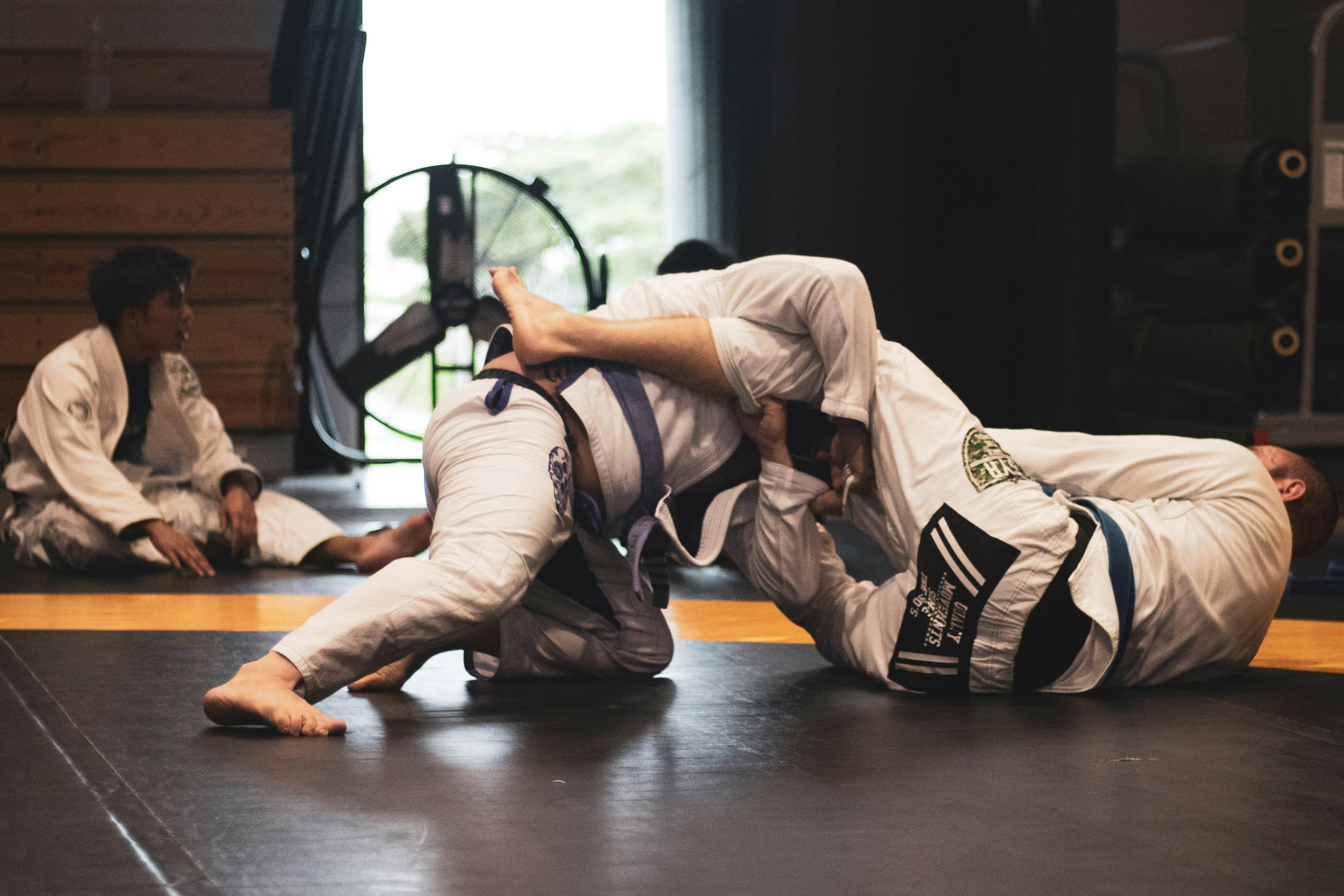
Photo by Samuel Castro on Unsplash
If you ever studied a Japanese martial art, you’re familiar with such terms as sensei, which you called your teacher, and uke, the person who received a technique, which sensei used to demonstrate how to attack an opponent or defend from an opponent’s attack. Depending on the martial arts style you practiced and how traditional your sensei was, you may have learned more Japanese terms and how to count in Japanese.
Our sensei taught what he called kumi-uchi jujitsu as purely self-defense. He had served during WWII and the Korean War as a U.S. Army Ranger and saw plenty of combat. He knew how to kill a person with his bare hands as well as with a variety of weapons, and he did both during the war.
He and his CO, a captain, had been stationed in Japan as part of the U.S. post-WWII occupation forces and trained with a Japanese sensei in traditional kumi-uchi. also known as jujitsu. The were no fancy forms such as kata, common in karate. It was about surviving an attack. As sensei often said, “You can be a tenth-degree black belt, but if you don’t see that punch or kick coming, you’ll get coldcocked.” Another thing he often said was, “If you don’t feel it, you don’t know what it is.” He made sure we all knew what it was like to feel it.
With that in mind, we learned how to read body language and how an opponent might telegraph a punch by dropping the shoulder slightly of the arm that would deliver the punch. Before launching a kick, an opponent might shift his body slightly forward to free the rear leg before kicking or lean back slightly, taking the weight of the front foot if he were kicking with that foot. We also learned to notice a shifting movement by observing the opponent and his background.
A well-trained opponent would appear very relaxed, almost nonchalant, and telegraph very little, if at all. The trick was not to focus too much on the opponents arms, legs, or hands, but observe his body as part of where he stood in relation to the what was behind him such as a wall, a vehicle, or trees. If he moved in any way, you’d notice his body shift slightly in relation to the background.
When demonstrating the techniques with the uke, sensei might apply painful joint locks and control holds, then throw, strike, kick, choke, sweep, trip the uke, among other techniques. In short, uke served literally as a punching bag and fall guy.
Depending on what sensei wanted to demonstrate he’d either ask for someone to volunteer as the uke or simply point to a student and say, “uke.” But there was always someone who eagerly volunteered to be uke. The rest of us wondered if he was just being macho to show us and sensei how tough he was or whether he was a masochist and took pleasure in getting his ass handed to him in each class.
We had such a guy in our class. His name was Earl but everyone called him Early, because he was the kind of person who wasn’t only punctual, but who usually ten minutes early. Whenever he volunteered as uke for sensei, he’d go whole hog, so that he received more physical restraint from sensei than he would have if he weren’t so enthusiastic in his attack. On such occasions, some of of us would wince or even gasp, “That had to hurt!” But Early leaped to his feet grinning proudly like a Cheshire cat, as if he won a prize. Sensei, recognized Early’s ready willingness to volunteer and complimented him, exclaiming, “That’s the kind of spirit I expect from ALL of you!” He then would pick one of the rest of us for his next teaching example, which he’d deliver with results similar to Early’s. Those of us who served as uke for sensei, usually took Tylenol and applied Tiger Balm or a similar salve, following a hot shower after each workout. Early never limped or displayed any aftereffect from the punishment he took on the mat. He also claimed he never used painkillers or salves either.
On two occasions, Early arrived at the dojo late rather than early. The second time he arrived late, he apologized to sensei, who joked, “If you show up late a third time, we’ll rename you Lately instead of Early.”
“Yes, sir!” he shouted, and laughed with the rest of us.
Over time, the demands of college, jobs, and life interfered with our martial arts training. Then came and the Vietnam War. Those of us who didn’t have college deferments, volunteered, while others were drafted. A couple of those who went to Vietnam, didn’t make it home. Some of those who who did were never quite the same as before. Even Early.
Early lived up to his reputation and was among the first to volunteer. He enlisted in the Army and like sensei became a ranger. And like sensei, he saw plenty of action in Vietnam. He returned home, highly decorated with numerous medals, including a purple heart, which he pooh-poohed as little more than a scratch. But Early had clearly changed. He was quieter and seemed far more contemplative than he had when we trained together. The last time I saw him, he said he planned to take advantage of the G.I. Bill and finish college. He told me he planned to study Asian languages and philosophy.
Years later, I heard he spent a few months at a Buddhist monastery in Southeast Asia. After he returned to the U.S., he found a position with an organization, which helped war veterans readjust to civilian life. He continued working with vets even after he retired. Sensei would have been proud of him. The rest of us who are still alive are certainly proud of him as well. What a guy!
This was quite the story, Frederick. Obviously Early not only survived the Vietnam war, but then he also made himself useful by helping others adjust after the war. What a guy indeed! He must have had a pretty high pain threshold. Love, Maria
I love your UKE Early short story Frederick, these words just popped into my mind “real meat on the bone” and I’m sticking with that 🍯 keep the short stories coming and enjoy the ride 💛Lady G